
What you eat before and after a workout can make a big difference in your energy levels, exercise performance, and recovery. Whether your goal is to build muscle, lose weight, or improve your overall fitness, choosing the right foods can help you get more out of every training session.
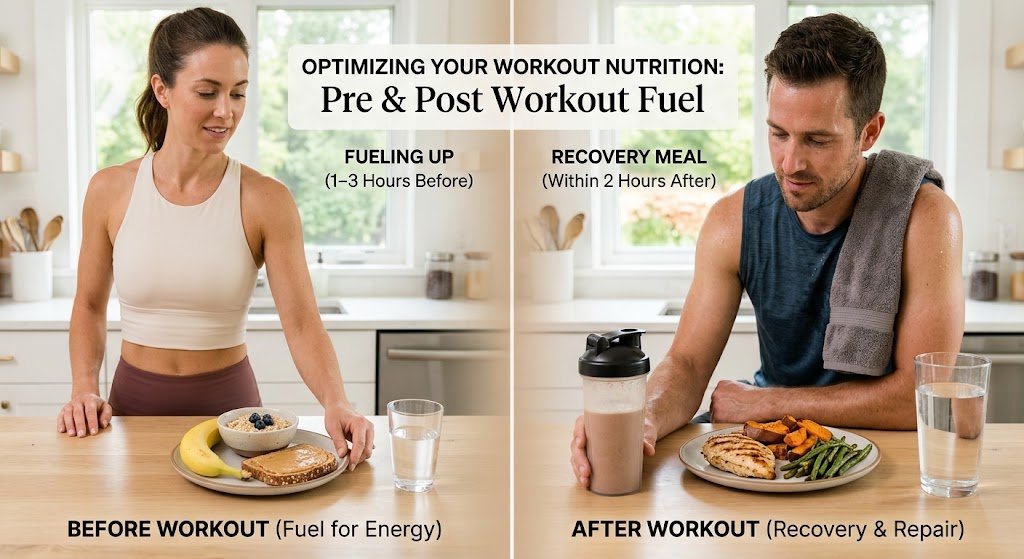
But what should you eat before and after a workout? The best approach is to eat a combination of carbohydrates and protein before exercising to provide energy and support your muscles. After your workout, prioritize protein and carbohydrates to help repair muscle tissue and replenish the energy your body used.
You don’t need expensive supplements or complicated meal plans to support your fitness goals. Everyday foods such as eggs, oatmeal, bananas, chicken, rice, Greek yogurt, and fruit can provide many of the nutrients your body needs.
In this guide, we’ll explore the best pre-workout and post-workout foods, when to eat them, and how to build a nutrition routine that supports your training goals.
Exercise places demands on your muscles and uses energy stored in your body. The food you eat helps provide that energy and supplies nutrients needed for recovery.
Proper workout nutrition serves two main purposes:
Before exercise: Your body needs fuel to support physical activity. Eating appropriate foods before training can help maintain energy levels and improve workout performance.
After exercise: Your muscles need nutrients to recover from training. Protein provides amino acids for muscle repair, while carbohydrates help replenish muscle glycogen, your body’s stored form of energy.
Combining good nutrition with consistent exercise can help you build muscle, improve endurance, and work toward your fitness goals.
The best foods to eat before a workout are generally rich in carbohydrates and contain some protein. Carbohydrates provide energy, while protein supplies amino acids that support muscle maintenance and repair.
Your meal size and timing should depend on how much time you have before exercising.
Bananas are one of the easiest pre-workout snacks because they’re convenient, easy to digest for many people, and contain carbohydrates.
They also provide potassium, an important mineral involved in normal muscle and nerve function.
A banana is a good option if you need a quick snack before heading to the gym.
How to eat it: Have one banana approximately 30–60 minutes before your workout, depending on your digestion and tolerance.
Oatmeal provides carbohydrates that can help fuel longer or more demanding workouts. It also contains fiber and other nutrients that make it a filling breakfast option.
You can combine oatmeal with fruit, milk, or Greek yogurt for a more balanced pre-workout meal.
How to eat it: Try a bowl of oatmeal with sliced bananas and milk around two to three hours before exercising. If you have a sensitive stomach, adjust the portion and timing.
Eggs provide high-quality protein, while whole-grain toast supplies carbohydrates.
Together, they make a balanced meal that can support strength training and other exercise routines.
How to eat it: Enjoy two eggs with whole-grain toast and a piece of fruit a few hours before your workout.
Greek yogurt is a convenient source of protein, while fruit provides carbohydrates.
This combination works well as a light pre-workout meal or snack.
How to eat it: Mix plain Greek yogurt with berries, sliced bananas, or a small amount of honey.
If you prefer a more substantial meal before exercising, chicken and rice are practical options.
Chicken provides protein, while rice supplies carbohydrates that help replenish your body’s energy stores.
How to eat it: Have a moderate serving of grilled chicken with rice and vegetables approximately two to four hours before your workout.
Not every food is ideal immediately before exercising. Some meals may cause bloating, discomfort, or sluggishness, especially when eaten too close to your workout.
Consider limiting the following foods right before training:
Greasy and fried foods: These can take longer to digest and may cause stomach discomfort.
Large high-fat meals: Foods containing substantial amounts of fat can slow digestion.
Very high-fiber meals: Large portions of beans, bran, and certain vegetables may cause bloating for some people.
Heavy meals: Eating too much immediately before exercise can make movement uncomfortable.
Excessive sugary drinks: These may provide quick energy but aren’t necessary for most ordinary workouts.
You don’t have to eliminate these foods from your diet. Simply pay attention to portion sizes and meal timing so you feel comfortable during exercise.
Meal timing depends on the size of your meal and your body’s ability to digest food.
Here is a general guide:
| Time Before Workout | What to Eat |
|---|---|
| 3–4 hours | Chicken, rice, and vegetables |
| 2–3 hours | Oatmeal, eggs, and fruit |
| 1–2 hours | Greek yogurt with fruit |
| 30–60 minutes | Banana or a small smoothie |
If you prefer exercising early in the morning, you may not have time for a full meal. A banana, a small smoothie, or another easily tolerated snack can be a practical option.
Some people can comfortably exercise without eating beforehand, especially during shorter or lighter sessions. The right approach depends on your preferences, workout intensity, and overall nutrition.
After exercising, your body needs nutrients to support muscle recovery and restore energy.
The best post-workout meals generally contain protein and carbohydrates.
Protein supports muscle repair and growth, while carbohydrates help replenish glycogen used during exercise.
Here are five good post-workout food choices.
Chicken breast is a popular post-workout protein source because it provides high-quality protein. Brown rice supplies carbohydrates and additional fiber.
You can add vegetables such as broccoli, carrots, or spinach to make the meal more balanced.
Why it works: Protein supports muscle repair, while carbohydrates help restore energy after training.
Eggs provide protein and several essential nutrients. Whole-grain bread supplies carbohydrates to help replenish energy.
This is a simple option for people who prefer a quick breakfast or light meal after exercising.
Why it works: Combining eggs and whole-grain bread provides protein and carbohydrates without requiring complicated meal preparation.
Greek yogurt provides protein, while berries contain carbohydrates, vitamins, and antioxidants.
It’s an easy option if you don’t feel like eating a large meal immediately after training.
Why it works: It offers a convenient combination of protein and carbohydrates to support recovery.
Salmon provides high-quality protein and omega-3 fatty acids. Sweet potatoes supply carbohydrates and nutrients such as potassium and vitamin A.
Add a serving of vegetables for a nutritious post-workout meal.
Why it works: This combination provides protein, carbohydrates, and healthy fats as part of a balanced diet.
A smoothie can be a convenient option when you’re busy or don’t have time to prepare a full meal.
You can blend together:
One banana
One cup of milk or fortified soy milk
Greek yogurt or protein powder
A small amount of oats
Ice
Why it works: It provides protein and carbohydrates in an easy-to-consume format.
You don’t need protein powder to make an effective post-workout smoothie. Whole-food ingredients can provide plenty of nutrients.
You don’t need to rush to eat immediately after finishing your workout.
For most people, having a balanced meal within a few hours of exercising is sufficient, especially if they ate a protein-rich meal before training.
If you trained on an empty stomach or have another demanding workout scheduled within several hours, eating sooner may be beneficial.
A practical approach is to have a protein-rich snack or meal within approximately one to two hours after exercise.
The most important factor is meeting your overall daily nutritional needs rather than worrying about a strict 30-minute anabolic window.
Protein is essential for maintaining and building muscle. It provides amino acids that help your body repair and develop muscle tissue following resistance training.
For healthy adults who exercise regularly, a commonly recommended daily protein range is approximately 1.4–2.0 grams per kilogram of body weight.
For example, someone weighing 70 kilograms may aim for approximately 98–140 grams of protein daily.
You can divide your protein intake across meals and snacks throughout the day rather than consuming most of it in one sitting.
Good protein sources include:
Chicken and turkey
Eggs
Fish and seafood
Lean beef
Greek yogurt
Milk and cottage cheese
Tofu and beans
Protein shakes
Your individual protein requirements depend on your training goals, activity level, and overall health.
Yes. Your food choices and overall calorie intake should reflect what you’re trying to accomplish.
Focus on consuming enough calories and protein to support muscle development.
Before your workout, choose foods containing carbohydrates and protein, such as oatmeal with Greek yogurt or chicken with rice.
After exercising, prioritize protein-rich meals such as eggs, salmon, chicken, or a protein smoothie.
Consistency with your total daily protein intake is more important than relying on a specific post-workout supplement.
You can still eat before and after workouts while working toward weight loss.
Focus on balanced meals with appropriate portions rather than skipping food to compensate for calories burned during exercise.
Some good options include:
Eggs with whole-grain toast.
Greek yogurt with berries.
Grilled chicken with vegetables and rice.
Fish with sweet potatoes.
A protein smoothie with fruit.
A sustainable calorie deficit, regular physical activity, and sufficient protein can help support fat loss while preserving muscle.
If you participate in running, cycling, swimming, or other endurance activities, carbohydrates become especially important.
Include foods such as oatmeal, rice, potatoes, bananas, and whole grains to help fuel longer workouts.
For prolonged or intense exercise lasting more than an hour, additional carbohydrate intake during activity may also be useful.
Absolutely. Hydration is an important part of exercise performance and recovery.
Your body loses water through sweat, and insufficient fluid intake can contribute to fatigue and reduced exercise performance.
Follow these basic hydration habits:
Drink water regularly throughout the day.
Have water before starting your workout.
Take small drinks during exercise as needed.
Rehydrate after training, especially if you’ve sweated heavily.
Consider electrolytes during prolonged exercise or sessions in hot conditions.
For most workouts lasting less than an hour, water is generally sufficient. Sports drinks may be useful during longer, demanding sessions when you need additional carbohydrates and electrolytes.
Even if you’re exercising consistently, certain nutrition mistakes can make it harder to reach your goals.
1. Skipping meals without considering your energy needs
Training without adequate fuel may leave you feeling tired, especially during demanding workouts. Make sure your overall food intake supports your activity level.
2. Eating too much immediately before exercise
Large meals can cause stomach discomfort. Give yourself enough time to digest before starting an intense workout.
3. Not consuming enough protein
Protein supports muscle repair and development. Include protein-rich foods throughout the day.
4. Relying only on supplements
Protein powders and sports supplements can be convenient, but they aren’t replacements for balanced meals.
5. Forgetting to hydrate
Even mild dehydration can affect how you feel during exercise. Make water intake part of your daily routine.
6. Following an overly restrictive diet
Cutting out entire food groups without a good reason can make it difficult to get enough nutrients and energy. Choose a balanced eating approach that you can maintain.
Knowing what to eat before and after exercise is a good starting point, but putting together a nutrition routine that supports your specific fitness goals can sometimes be challenging.
A personal trainer can help you understand how your training schedule, workout intensity, and fitness objectives relate to your daily eating habits.
For example, someone focused on building muscle may need a different nutrition strategy from someone working toward weight loss or improved endurance.
At Kirkland Personal Trainer, you can explore training and nutrition resources designed to support your fitness journey.
If you’d like to understand the relationship between professional fitness coaching and healthy eating, read our guide on whether personal trainers help with nutrition.
For individualized nutrition advice, especially if you have a medical condition or specific dietary requirements, consider working with a registered dietitian.
Knowing what to eat before and after a workout can help you improve your energy, support muscle recovery, and make better progress toward your fitness goals.
Remember that you don’t need complicated meal plans or expensive supplements to get started. Focus on balanced meals, sufficient protein, healthy carbohydrate sources, and proper hydration.
Whether you want to build muscle, lose weight, or improve your overall fitness, combining the right nutrition habits with a structured exercise program can help you get better results.
Ready to take your fitness to the next level?
At Kirkland Personal Trainer, you can explore personalized training programs designed to help you build strength, develop muscle, and work toward your fitness goals.
Visit Kirkland Personal Trainer to discover available training programs and find an approach that fits your needs.
Start fueling your body properly, stay consistent with your workouts, and make every training session count!