
Starting a strength training routine can feel intimidating, especially if you’re unsure how many days a week you should spend lifting weights. Should you train every day? Is twice a week enough? And how much rest do your muscles actually need?
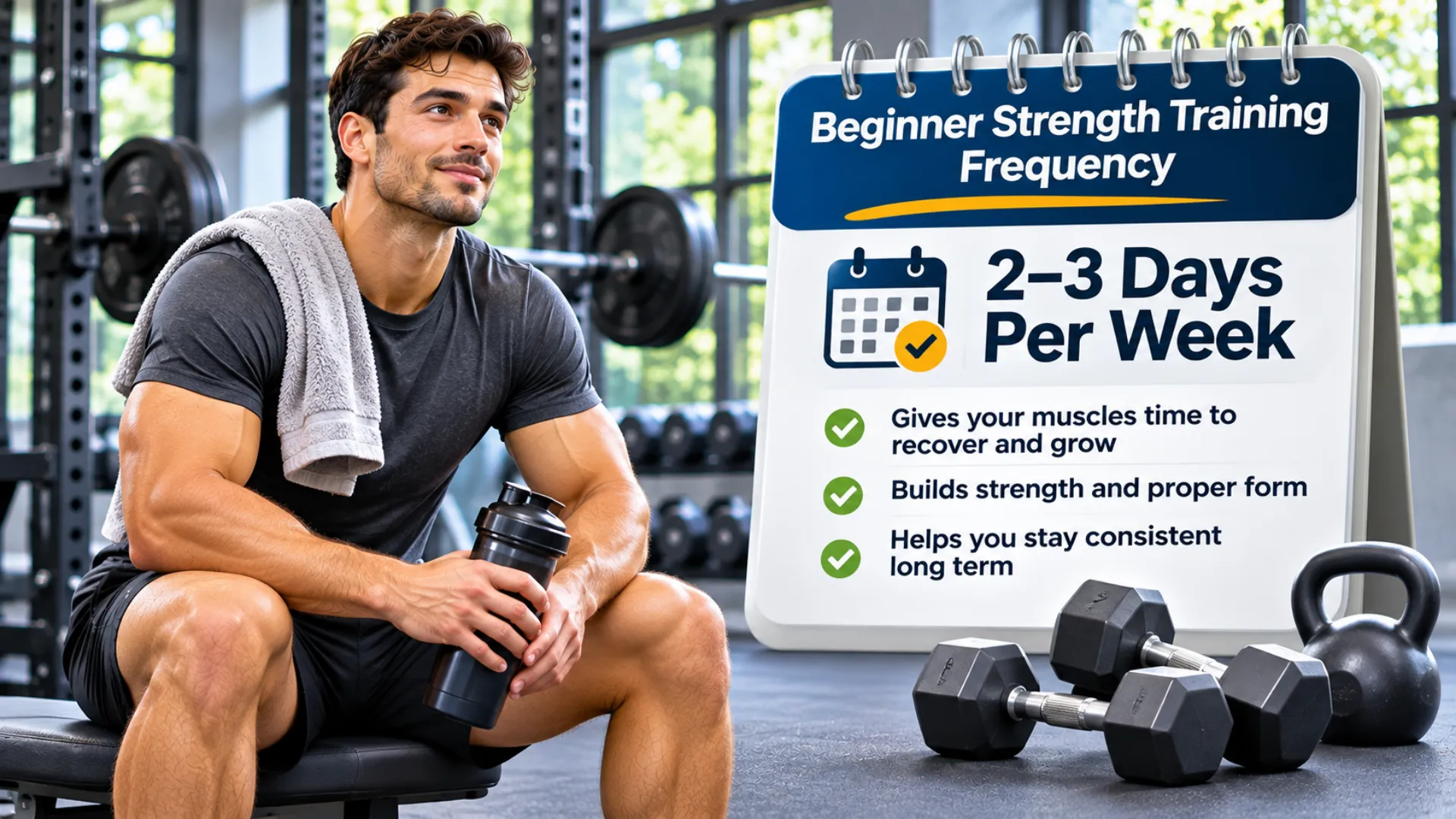
For most beginners, strength training two to three days per week is a practical starting point. This gives your body regular opportunities to build strength while allowing enough time to recover between workouts.
You don’t need to spend hours at the gym or train every muscle group every day to see progress. A consistent routine that includes the major muscle groups, manageable exercises, and gradual increases in difficulty can help you develop strength and improve your overall fitness.
Whether you’re exercising at home or joining a gym in Kirkland, understanding how often to strength train can help you build a routine you can maintain.
Most beginners should aim for two to three strength training sessions per week.
The Centers for Disease Control and Prevention (CDC) recommends that adults perform muscle-strengthening activities on at least two days each week, targeting all major muscle groups. These include the legs, hips, back, abdomen, chest, shoulders, and arms.
For someone new to exercise, two sessions per week can provide a good foundation. Once you become more comfortable with the movements and your recovery improves, you can consider adding a third session.
Here’s a simple breakdown:
2 days per week: A good starting point for beginners who want to learn proper technique and develop consistency.
3 days per week: A practical option for people who have adjusted to regular training and want more opportunities to practice exercises.
4 days per week: An option for beginners who have developed a training foundation and can manage the additional workload and recovery.
More training days don’t automatically mean better results. Your workout quality, exercise technique, training effort, and recovery habits matter just as much as frequency.

When you’re excited about starting a fitness routine, it can be tempting to work out every day. However, training the same muscles intensely without enough recovery can lead to excessive fatigue and make it harder to maintain good performance.
Strength training creates a stimulus that challenges your muscles. During recovery, your body repairs and adapts to that training.
Taking rest days helps you:
Recover between demanding workouts.
Maintain better exercise technique.
Manage muscle soreness and fatigue.
Prepare for your next training session.
Build a routine you can follow consistently.
For most beginners, leaving approximately 48 hours before training the same muscle groups intensely again is a useful guideline. This doesn’t mean you need to remain inactive on rest days. Walking, gentle cycling, and light mobility exercises can help you stay active without adding another demanding workout.
A good beginner strength training schedule should be simple, balanced, and easy to follow. Full-body workouts are often a practical choice because they allow you to train your major muscle groups in fewer weekly sessions.
Here are two examples you can use depending on your availability and fitness level.
This schedule is ideal if you’re completely new to strength training or have a busy weekly routine.
| Day | Workout |
|---|---|
| Monday | Full-body strength training |
| Tuesday | Walking or light cardio |
| Wednesday | Rest or active recovery |
| Thursday | Full-body strength training |
| Friday | Walking or light cardio |
| Saturday | Optional recreational activity |
| Sunday | Rest |
During each strength session, focus on exercises that work multiple muscle groups.
Example Monday and Thursday workout:
| Exercise | Sets | Reps |
|---|---|---|
| Bodyweight squats | 2 | 10–12 |
| Incline push-ups | 2 | 8–10 |
| Dumbbell rows | 2 | 10–12 |
| Glute bridges | 2 | 12–15 |
| Dumbbell shoulder press | 2 | 10 |
| Plank | 2 | 20–30 seconds |
Start with a manageable resistance level. If an exercise feels too difficult, use a simpler variation or reduce the weight.
You can gradually increase the repetitions or resistance as your technique and strength improve.
If you’ve already become comfortable with basic movements, three full-body sessions per week can provide additional training opportunities.
| Day | Workout |
|---|---|
| Monday | Full-body strength training |
| Tuesday | Walking or light cardio |
| Wednesday | Full-body strength training |
| Thursday | Rest or active recovery |
| Friday | Full-body strength training |
| Saturday | Light cardio or recreational activity |
| Sunday | Rest |
You don’t need to perform exactly the same exercises every session. You can make small changes while keeping the main movement patterns consistent.
Monday: Full-Body Workout A
Goblet squats: 2 sets of 10–12 reps
Dumbbell chest press: 2 sets of 10 reps
Seated cable rows: 2 sets of 10–12 reps
Glute bridges: 2 sets of 12 reps
Plank: 2 sets of 20–30 seconds
Wednesday: Full-Body Workout B
Reverse lunges: 2 sets of 8–10 reps per leg
Lat pulldowns: 2 sets of 10–12 reps
Dumbbell shoulder press: 2 sets of 10 reps
Romanian deadlifts: 2 sets of 10 reps
Dead bugs: 2 sets of 10 reps per side
Friday: Full-Body Workout A
Repeat Monday’s workout. If your form is consistent and you feel recovered, gradually increase the repetitions or resistance.
This approach gives you regular practice with foundational movements without requiring you to train every day.
Most beginners can start with strength training sessions lasting approximately 30 to 45 minutes.
You don’t need to complete a long workout to make progress. The important thing is to perform exercises correctly, use appropriate resistance, and allow enough rest between sets.
A beginner session can follow this structure:
Warm-up: 5–10 minutes. Walk, cycle lightly, or perform dynamic movements to prepare your body.
Strength exercises: 20–30 minutes. Complete four to six exercises targeting the major muscle groups.
Cool-down: 3–5 minutes. Finish with gentle movement and stretching if comfortable.
As your fitness improves, you can adjust the length of your workouts based on your goals and available time.
The number of sets and repetitions depends on your experience, exercise selection, and training goals.
For beginners, a simple starting point is:
Sets: 1–3 sets per exercise.
Repetitions: Around 8–12 repetitions for many resistance exercises.
Rest between sets: Approximately 60–120 seconds, or longer when needed.
Training effort: Choose a resistance that challenges you while allowing you to maintain proper technique.
For example, if you’re performing dumbbell squats, choose a weight that allows you to complete 10 controlled repetitions without losing your balance or compromising your form.
You don’t need to lift the heaviest weight available. Learning how to perform each movement correctly is more important than increasing resistance too quickly.
As you become stronger, you can gradually increase your weights, repetitions, or sets.
Rest is an important part of a beginner workout routine. Your muscles need time to recover after challenging resistance exercises.
If you complete a full-body strength workout on Monday, for example, Wednesday can be your next strength training day. This provides a recovery period between sessions.
However, recovery time isn’t exactly the same for everyone. It depends on your training intensity, exercise experience, sleep, nutrition, and overall activity level.
Pay attention to how your body responds after each workout.
Signs you may need more recovery include:
Muscle soreness that makes normal movement difficult.
Feeling unusually tired before your next session.
A noticeable drop in your usual exercise performance.
Difficulty maintaining proper technique.
Persistent discomfort rather than ordinary muscle soreness.
Mild soreness can happen when you introduce new exercises, but you shouldn’t feel that you need to push through significant pain to make progress.
Once you’ve established a regular schedule, the next step is gradually challenging your muscles.
This is known as progressive overload. It means increasing the demands of your workout over time as your body adapts.
You can do this by:
When you can complete your target repetitions with good form, consider using slightly heavier weights during your next workout.
Avoid making large jumps in resistance. Small increases are easier to manage.
If you’re performing two sets of 10 squats comfortably, you could gradually work toward 12 repetitions before increasing the weight.
Progress isn’t always about lifting heavier weights. Improving your balance, control, range of motion, and consistency can also make your workouts more effective.
Avoid changing your entire workout routine every week. Repeating foundational exercises allows you to become more comfortable with the movements and track improvements over time.
If you want to learn more about organizing your exercises, sets, and weekly training schedule, read our related guide on what is the best workout program to build muscle?. It explains how to structure strength workouts, use progressive overload, and balance training with recovery.
Starting a new workout routine is easier when you know which habits can interfere with your progress.
Training too frequently. Working out every day without allowing enough recovery can increase fatigue. Start with two or three strength sessions per week and adjust as needed.
Lifting weights that are too heavy. Using excessive resistance can make it difficult to control your movements. Choose weights that challenge you without compromising your technique.
Skipping warm-ups. Going straight into demanding exercises without preparing your body can make your session feel more difficult. Spend a few minutes warming up before lifting.
Ignoring certain muscle groups. Focusing only on the chest, arms, or abs can leave other areas undertrained. Include exercises for your legs, back, hips, shoulders, and core.
Expecting results too quickly. Strength improvements happen gradually. Focus on completing your workouts consistently and improving your technique rather than expecting immediate physical changes.
Neglecting nutrition and sleep. Your body needs adequate food, hydration, and sleep to support training and recovery. Make these habits part of your fitness routine.
Yes. Two full-body strength training sessions per week can be enough to build a foundation of strength, particularly when you're new to exercise. Focus on training all major muscle groups and gradually improving your performance.
It's generally better to avoid demanding full-body strength workouts on three consecutive days when you're starting out. Spacing sessions throughout the week gives your muscles more time to recover. You can still do light activities such as walking on the days between workouts.
Full-body workouts are often a better starting point for beginners because they train the major muscle groups in fewer sessions. Split routines can become useful as your experience, training volume, and available workout days increase.
Many beginners benefit from at least one or two rest or active recovery days each week. The exact number depends on how often you train and how well you recover. Avoid training the same muscle groups intensely on consecutive days.
Some beginners notice improvements in strength, coordination, and exercise performance within the first few weeks. Visible changes in muscle size and body composition generally take longer and depend on training consistency, nutrition, sleep, and individual factors.
You don’t have to train every day to become stronger. For most beginners, two to three well-planned strength training sessions per week are enough to establish a consistent routine and start making progress.
The key is to choose exercises that work your major muscle groups, use resistance appropriate for your ability, and give your body enough time to recover. As your strength improves, you can gradually adjust your workout schedule and training intensity.
At Kirkland Personal Trainer, structured training programs can help you work toward your fitness goals with a plan that considers your experience, schedule, and current abilities.
Ready to build strength and develop better fitness habits? Explore our Strength Programs and take the next step toward a stronger, healthier body.
Start with a plan you can follow, stay consistent, and build your strength one workout at a time.