
Finding the best workout plan for fat loss can feel confusing when there are so many fitness routines promising fast results. Some focus entirely on cardio, others recommend high-intensity interval training (HIIT), and many suggest lifting weights to build muscle. So, which approach actually works?
The most effective fat loss workout plan combines strength training, cardiovascular exercise, and regular daily movement. Each plays a different role. Strength training helps preserve muscle while you lose weight, cardio increases energy expenditure and improves heart health, and everyday activities help you stay active outside the gym.
However, exercise alone isn’t the whole picture. Your nutrition, recovery, and consistency also influence how much body fat you lose.
Whether you’re just starting your fitness journey or looking to improve your current routine, here’s how to build a practical weekly workout plan that supports steady, sustainable fat loss.
The best workout for fat loss isn’t one specific exercise. It’s a combination of activities that helps you burn calories, maintain muscle, and improve your overall fitness.
Three types of training deserve a place in your routine.
Strength training should be one of the foundations of a fat loss program. When you reduce your calorie intake, your body can lose both fat and muscle. Resistance exercises help signal your body to maintain lean muscle as your weight decreases.
Maintaining muscle also helps you build a stronger, more defined appearance as you lose body fat.
Some effective strength training exercises include:
Squats
Lunges
Deadlifts
Bench presses
Push-ups
Lat pulldowns
Dumbbell rows
Shoulder presses
Focus on exercises that work multiple muscle groups. These movements allow you to train efficiently while developing strength throughout your body.
Aim for two to three strength training sessions per week if you’re starting out. As your fitness improves, you can gradually increase your training volume.
Cardiovascular exercise helps your body use more energy and can support reductions in body weight and body fat. It also improves endurance, heart health, and your ability to stay active.
You don’t need to run long distances or spend hours on a treadmill to benefit from cardio.
Consider adding these activities to your routine:
Brisk walking
Cycling
Swimming
Jogging
Elliptical training
Stair climbing
Rowing
Moderate-intensity cardio is a good starting point for most people. You should be breathing faster than usual but still able to hold a conversation.
Start with manageable sessions and gradually build toward at least 150 minutes of moderate-intensity aerobic activity per week. Some people may benefit from doing more as their fitness and recovery allow.
High-intensity interval training, or HIIT, alternates short periods of challenging exercise with recovery periods.
For example, you might cycle quickly for 30 seconds, then pedal slowly for 60 seconds. Repeating this pattern creates an interval workout that can improve cardiovascular fitness in a relatively short amount of time.
HIIT exercises may include:
Stationary bike sprints
Jump rope intervals
Mountain climbers
Bodyweight squats
Step-ups
Fast walking intervals
A short HIIT session can be useful when your schedule is busy. However, it isn’t necessary for everyone, and doing intense workouts every day can make recovery difficult.
Start with one session per week if you’re already comfortable with regular exercise. Beginners can build a fitness base with walking and moderate cardio before adding high-intensity intervals.
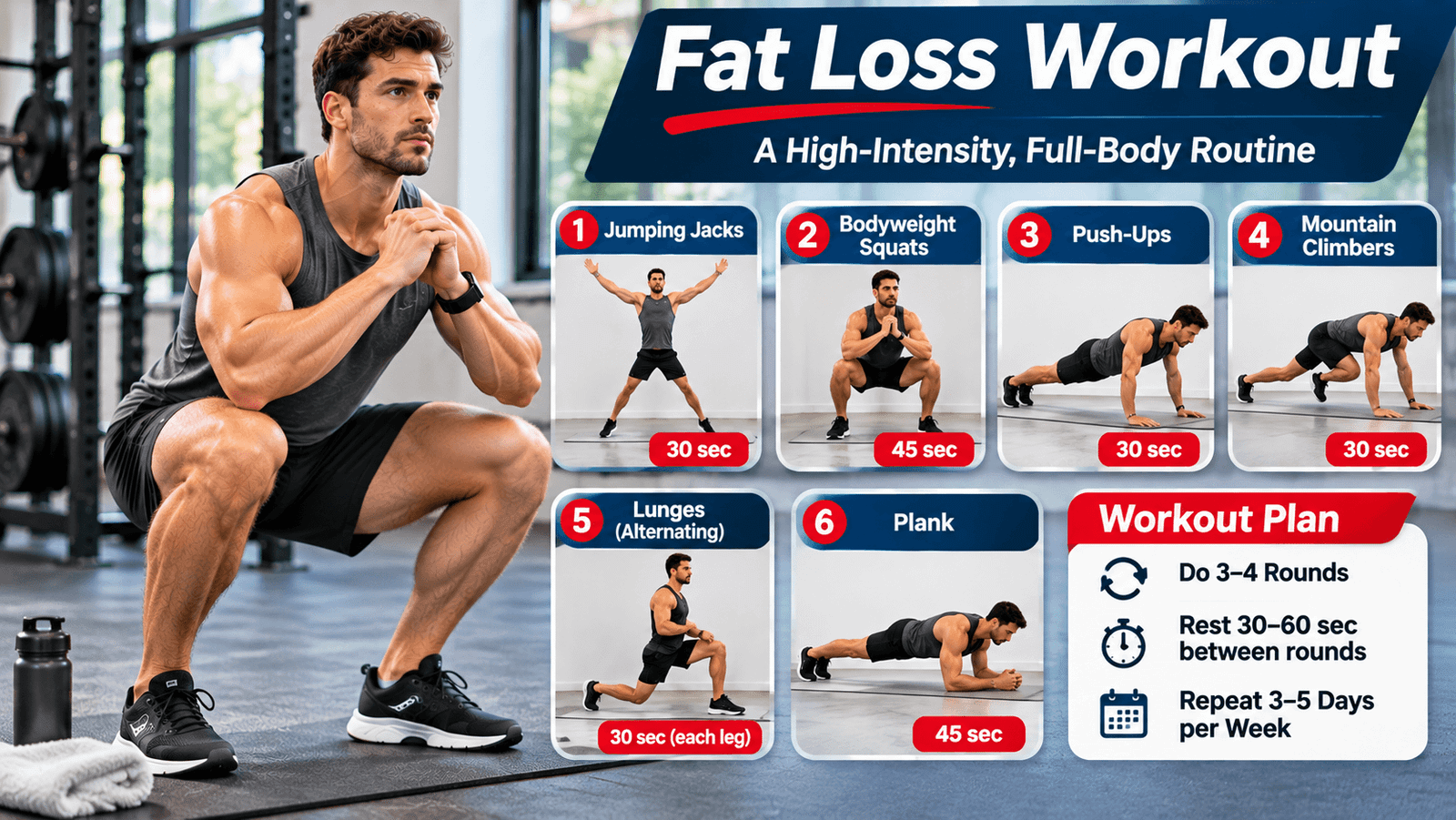
A good workout schedule balances resistance training, cardio, and recovery. You don’t need to train every day to make progress. The goal is to create a routine that challenges your body without leaving you constantly exhausted.
Here’s an example of a five-day weekly workout plan.
Start the week with a full-body session that works your major muscle groups.
| Exercise | Sets | Reps |
|---|---|---|
| Squats | 3 | 10–12 |
| Dumbbell bench press | 3 | 10–12 |
| Lat pulldowns | 3 | 10–12 |
| Dumbbell lunges | 2 | 10 each leg |
| Plank | 3 | 30–45 seconds |
Rest for approximately 60–90 seconds between sets, adjusting as needed to maintain good form.
Choose weights that challenge you while allowing you to complete each repetition with control.
Spend 30–40 minutes doing an activity you enjoy.
Good options include:
Brisk walking outdoors
Cycling
Swimming
Using an elliptical machine
Keep the pace steady. You should feel like you’re working, but you shouldn’t be completely out of breath.
Focus on your legs, glutes, and abdominal muscles.
| Exercise | Sets | Reps |
|---|---|---|
| Goblet squats | 3 | 12 |
| Romanian deadlifts | 3 | 10–12 |
| Step-ups | 2 | 10 each leg |
| Glute bridges | 3 | 12–15 |
| Dead bugs | 3 | 10 each side |
Use controlled movements and prioritize proper technique. If you’re new to strength training, start with lighter weights or bodyweight variations.
Give your muscles time to recover while keeping your body moving.
Try:
A 20–30-minute walk
Gentle cycling
Light stretching
Mobility exercises
Recovery days are part of a successful training plan. They help you manage fatigue and prepare for your next workout.
Train your chest, back, shoulders, and arms.
| Exercise | Sets | Reps |
|---|---|---|
| Push-ups | 3 | 8–12 |
| Seated cable rows | 3 | 10–12 |
| Dumbbell shoulder press | 3 | 10 |
| Biceps curls | 2 | 12 |
| Triceps pushdowns | 2 | 12 |
Finish with 10–15 minutes of easy-to-moderate cardio if you still have energy and can maintain good technique.
Choose an activity that keeps you moving for 30–45 minutes.
You could go for a longer walk, ride a bicycle, swim, or take a fitness class. Choose something you enjoy so you’re more likely to keep doing it.
Take a full rest day or enjoy light movement if you feel comfortable. Focus on sleep, hydration, and preparing for the next week.
Remember: This is a sample schedule, not a requirement to follow five workout days immediately. Beginners can start with two strength sessions and shorter cardio sessions, then increase their activity gradually.
Following a workout schedule is a good start, but how you approach your training also matters. These habits can help you get better results over time.
Your body adapts as you become stronger and fitter. If you keep using the same weights and repetitions indefinitely, your workouts may become less challenging.
Use progressive overload by gradually increasing one or more of the following:
The weight you lift
The number of repetitions
The number of sets
The difficulty of an exercise
The duration or intensity of cardio
You don’t need to increase everything at once. Small, manageable improvements are easier to maintain and help you avoid unnecessary strain.
Your activity outside the gym also contributes to your overall energy expenditure.
Simple habits can help you become more active:
Take a short walk during breaks.
Use the stairs when practical.
Walk after meals.
Stand up and move regularly if you work at a desk.
Choose active weekend activities.
You don’t have to complete every movement goal in one workout. Regular activity throughout the day adds up.
Even the best workout plan for fat loss may produce limited results if your eating habits don’t support your goals.
Fat loss generally requires a consistent calorie deficit, meaning you consume fewer calories than your body uses over time. Exercise helps increase energy expenditure, while nutrition plays a major role in managing calorie intake.
Build your meals around:
Protein: Chicken, fish, eggs, lean meat, Greek yogurt, beans, and tofu.
Vegetables: Broccoli, spinach, carrots, leafy greens, and other fiber-rich options.
Fruit: Berries, apples, oranges, bananas, and other whole fruits.
Carbohydrates: Oats, rice, potatoes, whole grains, and other sources of energy.
Healthy fats: Nuts, seeds, olive oil, and avocado.
Avoid relying on crash diets or eliminating entire food groups without a good reason. A balanced approach is generally easier to follow over the long term.
Training places stress on your body, and recovery gives your muscles time to adapt.
Poor sleep and insufficient recovery can affect your energy, workout performance, and ability to stay consistent.
Aim for seven to nine hours of sleep each night if possible. Give heavily trained muscle groups enough time to recover before working them hard again.
If you feel unusually tired, sore, or unable to maintain your normal performance, consider reducing your training intensity or taking an additional recovery day.
There isn’t one perfect workout duration for everyone. Your fitness level, schedule, training intensity, and nutrition all influence your results.
For a general starting point, consider:
Strength training: 30–60 minutes per session, two to three times per week.
Cardio: 20–40 minutes per session, depending on your fitness level.
Daily movement: Short walks and other activities throughout the day.
Recovery: At least one full rest day each week, with additional recovery when needed.
Adults are generally advised to get at least 150 minutes of moderate-intensity aerobic activity each week, along with muscle-strengthening activities on two or more days. You can divide this activity into shorter sessions that fit your schedule.
If you’re working toward fat loss, you may eventually need more activity, adjustments to your nutrition, or both. Increase your workload gradually rather than trying to do everything at once.
Sometimes, the problem isn’t a lack of effort. It may be the way your workout routine is structured.
Watch out for these common mistakes:
Doing cardio but skipping strength training. Cardio is useful, but resistance training helps preserve muscle during weight loss. Include both in your weekly routine.
Training intensely every day. More exercise doesn’t automatically mean better results. Your body needs recovery to perform well and adapt.
Changing workout programs too frequently. Switching routines every few days makes it difficult to track progress. Give a structured plan enough time to work.
Ignoring nutrition. Exercise supports fat loss, but your eating habits also affect your calorie balance. Pay attention to both.
Expecting immediate results. Body fat changes gradually. Focus on improvements in strength, endurance, energy, and consistency instead of judging your progress by daily scale changes.
Your body weight is only one way to measure progress. It can fluctuate because of hydration, food intake, and other normal changes.
Use several indicators to get a clearer picture:
Body measurements: Track your waist, hips, and other measurements every few weeks.
Progress photos: Take photos under similar lighting and conditions.
Workout performance: Record the weights, sets, and repetitions you complete.
Clothing fit: Notice changes in how your clothes feel.
Energy and endurance: Pay attention to improvements in daily activities and exercise.
Review your progress every few weeks rather than making changes based on one difficult workout or an unexpected scale reading.

If you’re unsure how to structure your workouts, following a planned program can make it easier to stay consistent.
For more guidance, read our related article on what is the best fat loss program for beginners. It explains what to look for in a beginner-friendly fat loss program, including strength training, cardio, nutrition, and accountability.
A structured approach can help you understand what to do, how to progress, and how to adjust your routine as your fitness improves.
A combination of strength training and cardiovascular exercise is an effective approach. Strength training helps preserve lean muscle, while cardio increases energy expenditure and improves cardiovascular fitness. Pair both with balanced nutrition and consistent daily movement.
If building or maintaining muscle is a priority, start with strength training while your energy is highest. You can follow it with moderate cardio. If your main goal is improving endurance, you may choose to prioritize cardio instead. The best order depends on your training goals and preferences.
Many people can start with three to five days of planned exercise per week. A practical routine might include two or three strength sessions and two cardio sessions, with walking and recovery activities on other days.
Walking can contribute to fat loss by increasing daily calorie expenditure. It is also low-impact and accessible for many fitness levels. However, combining walking with strength training and appropriate nutrition can support better overall body composition.
Neither is automatically better for everyone. HIIT can improve fitness in shorter sessions, while steady-state cardio is often easier to sustain and recover from. Choose the option that matches your fitness level, schedule, and preferences.
Getting results requires more than choosing exercises that burn calories. You need a workout routine that combines strength training, cardio, proper recovery, and nutrition that supports your goals.
At Kirkland Personal Trainer, you can explore structured fat loss programs designed to help you train with purpose and build consistent habits. Whether you’re new to exercise or ready to take your training further, having a clear plan can make the process easier to manage.
Ready to take the next step? Explore our Fat Loss Programs and find a training approach that fits your goals.
Start building a stronger, healthier body with a fat loss plan you can stick to.